
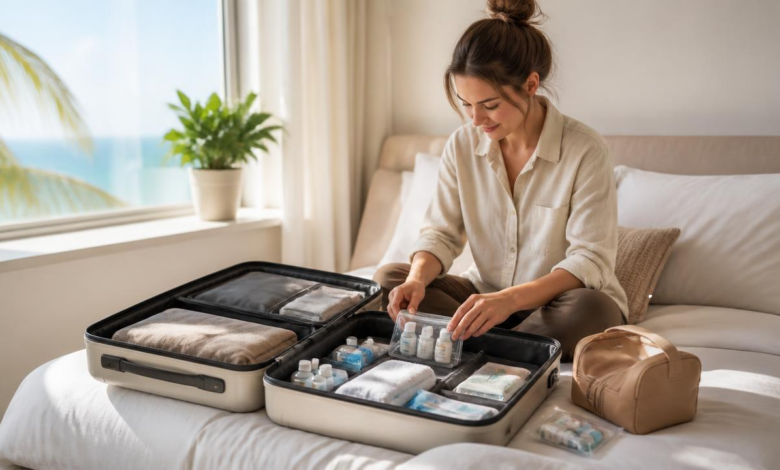
Traveling internationally for exciting trips? Planning flights, bookings, and big adventures is just the start. Smart travelers know that Health Hygiene Abroad Packing is as important as your passport. Preparing for common illnesses, hygiene challenges, and small emergencies can reduce stress. This gives you more freedom to enjoy your entire experience.
This guide helps you create a practical Wellness On The Go Packing List for short vacations, long-term travel, backpacking, and multi-stop journeys. You will find clear steps for Travel Medical Preparedness and advice on building an International Travel Health Kit. Learn realistic ways to stay well without overpacking for your journey.
Good travel health planning focuses on common issues. These include dehydration, stomach trouble, blisters, allergies, insect bites, and sun exposure. Poor sleep and minor injuries are also frequent concerns. To keep your bag light, consider pairing this guide with advice on Mastering Minimalist Packing.
This article provides educational and practical advice. However, it is not a substitute for professional medical guidance. Always consult a doctor or travel clinic before your trip. Discuss personalized decisions about vaccines, prescriptions, and specific destination risks.
Why Health & Hygiene Are Crucial for International Travel
Travel quickly changes your routine. You might cross time zones, eat new foods, sleep less, and walk more. Long hours in airports, buses, or train stations are also common. Even healthy travelers can feel run down when these changes accumulate.
That is why Preventing Illness While Traveling begins before your suitcase is zipped. A thoughtful packing plan helps you respond quickly to minor problems. This prevents them from becoming expensive or trip-disrupting situations.
Health preparation varies significantly by destination. Urban breaks, tropical islands, or high-altitude treks create different needs. Remote adventures and study-abroad programs also require unique planning. Considering these factors ensures you pack appropriately for your specific journey.
Many travelers prioritize style, weather, and electronics, often forgetting medical access. Familiar medicine brands might be unavailable abroad. Language barriers, local regulations, and pharmacy access can complicate even basic purchases. Packing smartly protects your time, budget, and comfort.
The Ultimate Travel Health & Hygiene Packing List
Your packing list should align with your destination, trip length, and planned activities. Your personal health profile is also key. A beach holiday, for example, may require extra Sun protection travel items. A backpacking route might need stronger blister care and water treatment solutions.
At a minimum, most travelers should organize health items into four categories. These ensure comprehensive coverage for common travel needs. This organized approach helps in effective preparation for any journey.
The categories include: Medical essentials like prescriptions and first aid items. Hygiene essentials for travel such as sanitizer and toiletries. Wellness support including a water bottle and sleep aids. Lastly, Documents like insurance and emergency contacts.
Medical Preparedness Essentials
Prescription Medications and Copies
The core of Travel Medical Preparedness is packing your prescription medicine first. Bring enough for your entire trip, plus a few extra days for delays. Keep all medications in their original, labeled packaging. This is especially vital for controlled medicines or injectable supplies.
Always carry prescription items in your hand luggage, never only in checked bags. Lost luggage can quickly turn into a medical emergency. It is also wise to keep digital and printed copies of prescriptions. Include a doctor’s letter if your treatment involves syringes or special devices.
Rules differ by country, so check official health and border guidance before departing. The CDC Travelers’ Health portal and your destination’s embassy website are excellent resources. This research is crucial for Prescription medication travel planning.
Over-the-Counter Travel Kit
A well-stocked OTC kit saves time and reduces stress when minor issues arise. Different countries may offer varying formulas, strengths, or brand names. Therefore, it is helpful to bring familiar basic remedies from home.
Essential items include pain relievers and fever reducers. Antihistamines for allergies or itchy bites are also important. Anti-diarrheal medication, oral rehydration salts, and antacids for indigestion are highly recommended. Do not forget motion sickness tablets and cold/flu relief.
These items are among the most useful for Packing For Illness Abroad. They do not replace professional medical care. However, they can significantly ease the first 24 hours of a problem, offering comfort and initial relief.
Comprehensive First Aid Kit Basics
Your First Aid Kit Travel Abroad does not need to be large; it needs to be practical. Focus on the most probable situations you might encounter. These include small cuts, blisters, headaches, stomach upset, minor burns, and insect bites.
Key contents are adhesive bandages in various sizes, sterile gauze, and medical tape. Antiseptic wipes and antibiotic ointment are also crucial. Hydrocortisone cream, blister pads, tweezers, small scissors, and a digital thermometer complete the basic kit.
These are the Best travel first aid kit essentials for most international trips. For families, adventure travelers, or remote routes, consider adding an elastic bandage. Wound-closure strips and a backup thermometer battery might also be valuable additions.
Specialty Medical Items
If you manage ongoing conditions like asthma, severe allergies, or diabetes, customize your Travel Safety Medical Supplies. Bring more than one rescue inhaler if prescribed. Include backup glucose supplies if necessary. Pack enough treatment to cover delays or unexpected itinerary changes.
Travelers with severe allergies should not assume easy access to replacement EpiPens abroad. Keep emergency medication readily accessible. Consider wearing a medical alert bracelet for quick identification. A small written note explaining your condition can also be vital in emergencies.
Traveler’s Diarrhea, Allergies, and Bite Prevention
Traveler’s Diarrhea: Prevention and Response
Digestive issues remain one of the most common travel problems worldwide. The goal is preparation, not panic. Pack anti-diarrheal medication and oral rehydration salts. Have a clear plan for when to rest, hydrate, and seek medical help if symptoms worsen.
Choose food carefully and always wash or sanitize hands before eating. Be cautious with raw foods, unpasteurized dairy, and untreated water. If food safety is a concern at your destination, consult guides on safe eating practices.
Persistent fever, blood in stool, or signs of serious dehydration require immediate medical attention. These symptoms indicate a need for professional treatment beyond self-care. Do not delay in seeking help for these serious concerns.
Insect Repellent and Bite Care
Insect bite prevention travel is essential for nearly every travel kit. This is especially true in tropical, humid, rural, or wet environments. Mosquitoes and other insects are not just nuisances; in some regions, they can transmit diseases.
Pack a repellent with an active ingredient recommended by public health authorities. Options include DEET or picaridin, suited to your destination. Also, bring after-bite relief, hydrocortisone cream, and lightweight clothing that covers arms and legs in higher-risk areas.
For up-to-date prevention advice, the World Health Organization travel and health guidance is a strong reference. If you plan outdoor activities, carry repellent in your day bag, not just main luggage.
Personal Hygiene Must-Haves for Travel
Hand Sanitizer and Wet Wipes
Hand hygiene is one of the simplest and most effective ways to avoid illness. Pack alcohol-based sanitizer. Use it after public transport, before meals, and after touching high-contact surfaces like tray tables or railings.
Wet wipes are useful when sinks are unavailable, but they should supplement handwashing, not replace it. They are also handy for cleaning airplane armrests, train tables, phone screens, and reusable cutlery. These small items are a crucial first line of defense in your Health Hygiene Abroad Packing routine. Keep a set in your personal item and another in your main bag.
Eco-Friendly and Travel-Sized Toiletries
Good hygiene is easier with compact and familiar products. Bring travel-size basics: toothbrush, toothpaste, deodorant, soap, shampoo, and conditioner. Include any specific skincare or daily body products you rely on.
Solid bars work well for carry-on travel, reducing liquid limits and leaks. Refillable containers also save space and minimize waste. Pack enough for the initial part of your trip, especially if you have sensitive skin or specific product needs.
Longer itineraries require more planning for Hygiene products for long term travel. Consider laundry soap sheets, nail care tools, and products suited for hot, humid, or very dry climates. Plan beyond the first week to ensure continued comfort.
Feminine Hygiene Products for Anywhere
The availability and quality of menstrual products can vary significantly across countries. This is especially true in rural areas or smaller towns. Pack enough of your preferred products for at least the start of your trip. Bring more if you rely on a specific brand or style.
Pain relief, spare underwear, a discreet pouch, and sealable bags for disposal can simplify travel days. Menstrual cups or other reusable options may be practical for long-term travelers with reliable cleaning access.
Sun Protection: More Than Just Sunscreen
Sun protection travel involves multiple layers, not just one bottle. Sunscreen is vital, but so are sunglasses, hats, and breathable long-sleeved clothing. Plan your outdoor exposure to avoid the strongest UV levels during peak hours.
Bring broad-spectrum SPF 30 or higher and reapply as directed, especially after swimming or sweating. Sunburn can quickly ruin a trip. Repeated heavy exposure also increases real health risks. Sun care is essential for beach vacations, hikes, and city walking.
Wellness on the Go Beyond the Basics
Hydration Heroes: Water Filters and Bottles
Hydration is often underestimated during travel. Flights are drying, hot climates increase fluid loss, and busy sightseeing can lead to forgetting to drink. A reusable water bottle encourages healthy habits and reduces plastic waste.
In destinations with uncertain tap water quality, Water purification travel tools may be worth the space. Options include a filtered bottle, purification tablets, or other trusted systems. The best choice depends on your destination and comfort level.
If you are traveling to remote areas, water planning becomes even more critical. Pharmacies and clinics may be far away. Combining this section with guidance on navigating remote destinations is highly recommended for safety.
Nutritional Support: Healthy Snacks and Supplements
Nutritious snacks can prevent poor food choices when you are tired, delayed, or have limited options. Pack simple, travel-friendly options like nuts, dried fruit, granola bars, crackers, or protein snacks.
If you regularly use supplements, bring only what you truly need and keep them clearly labeled. There is no need to overpack your bag with wellness items. Focus on consistency in your routine rather than quantity.
This is a practical aspect of Maintaining wellness during international travel. Small, stable routines often contribute more to your health than ambitious goals while on the move. Prioritize simple habits for sustained well-being.
Sleep and Comfort Aids
Poor sleep diminishes patience, energy, and immunity. A lightweight eye mask, earplugs, neck pillow, and compression socks can make long transport days much more bearable. If jet lag is a concern, plan rest strategically instead of relying solely on caffeine.
For deeper recovery strategies, explore tips on mastering long-haul flights and managing jet lag. Sleep support is a vital component of every serious Wellness On The Go Packing List. Prioritize restful travel to enhance your overall experience.
Mental Wellness and Stress Management
Travel is rewarding, but it can also be tiring, overstimulating, and emotionally intense. A journal, a favorite playlist, a downloaded meditation app, or simple reading can help you reset. This is especially useful during busy itineraries.
Mental wellness is an integral part of travel health, not a separate concern. When you feel grounded and calm, you often make better decisions. This applies to food, rest, money, and personal safety while abroad.
Pre-Travel Health Checklist Before You Pack
Before you begin packing, complete a short checklist. This can prevent last-minute mistakes and help identify any health gaps. Addressing these concerns before departure gives you time to resolve them.
First, book a doctor or travel clinic visit 4 to 6 weeks before departure if possible. Review routine and destination-specific Travel vaccinations. Check rules for prescription medicine at your destination country.
Confirm your Travel insurance medical coverage, including evacuation if relevant. Save emergency numbers, embassy contacts, and accommodation addresses. Refill prescriptions and assemble your Travel medical supplies checklist for international trips. Research food, water, climate, altitude, and insect risks thoroughly.
Staying Healthy Abroad: Tips for Your Trip
Packing is only half the effort; your daily habits abroad are just as important. Conscious choices can significantly impact your health and well-being while traveling. Consistency in these practices often outweighs perfect preparation.
Always wash or sanitize your hands before eating. Drink safe water and hydrate regularly throughout the day. Exercise caution with raw foods and street food, especially in unfamiliar environments. Protect yourself from sun exposure and insect bites effectively.
Prioritize getting enough sleep, especially after long travel days or significant time zone changes. Walk, stretch, and move during extended transit periods to promote circulation. Crucially, do not ignore early symptoms of illness; address them promptly.
If you have dietary restrictions or sensitivities, planning meals ahead can reduce risks. Travelers managing food allergies should also read Navigating Food Allergies Abroad. These are useful Healthy Travel Tips for backpackers and digital nomads.
What to Do in a Medical Emergency Abroad
Even with thorough planning, emergencies can occur. If a situation feels severe, seek professional medical help immediately. Avoid trying to self-treat serious conditions. Breathing difficulty, chest pain, or severe allergic reactions require urgent attention.
Heavy bleeding, confusion, high fever, or severe dehydration also demand prompt care. Keep your insurance contact details, emergency numbers, and a passport copy easily accessible. Your medication list should also be readily available. Save these both offline and on paper.
Your hotel, host, tour guide, or local contacts may assist in finding a clinic or hospital quickly. One practical step: inform a trusted person back home of your itinerary and how to reach you. This simple safety habit is invaluable during disruptions.
What to Pack for Health Emergencies Abroad: A Simple Summary
If you need a quick answer to What to pack for health emergencies abroad, focus on this core bundle. This selection covers the most common travel health needs without overfilling your luggage. Prepare effectively for unexpected situations.
This core bundle includes prescription medicine in original packaging. Copies of prescriptions and a doctor’s note are also essential. Pack pain reliever, antihistamine, anti-diarrheal, and rehydration salts for common ailments.
Also include bandages, antiseptic wipes, gauze, tape, and blister care. Hand sanitizer, wet wipes, tissues, and basic toiletries are crucial. Do not forget insect repellent, sunscreen, a reusable bottle, and a safe water plan. Finally, always have your insurance information and emergency contacts readily available.
Conclusion: Travel Smart, Stay Healthy
The best trips feel freer when you are well-prepared. A solid plan for Health Hygiene Abroad Packing helps you avoid preventable problems. It allows you to respond calmly to minor illnesses. Most importantly, it protects your energy for the experiences that matter most.
You do not need to pack for every conceivable scenario. The key is finding the right balance of medical essentials, hygiene basics, and wellness support. Combining these with destination awareness forms the heart of effective Travel Medical Preparedness.
Before your next journey, build your kit, review your documents, and update your routine. Then, continue exploring our travel guides to plan smarter, safer adventures from beginning to end. Embrace preparedness for a truly enjoyable trip.
Disclaimer: This article is for general informational purposes only and is not medical advice. Consult a qualified healthcare professional or travel medicine specialist before international travel, especially if you have a medical condition, need vaccines, or take prescription medication.